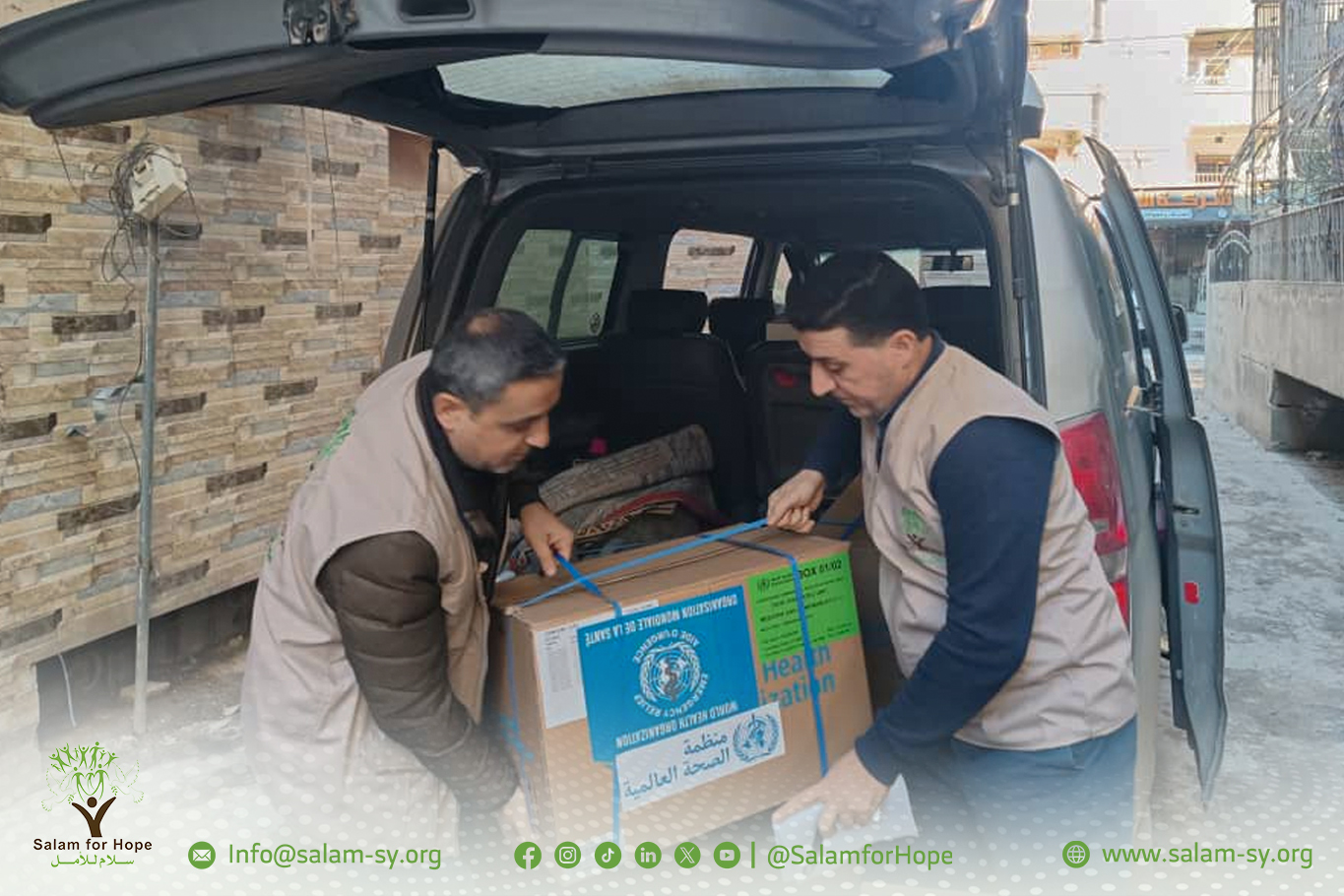
In light of the current circumstances and the significant gap in healthcare service delivery within displacement shelters, the urgent need for effective health interventions to meet the basic needs of displaced populations has become increasingly evident. With the generous support of the World Health Organization (WHO) – Qamishli Office, and through the dedicated efforts of the volunteer medical team of Salam for Hope Organization, the Health Program continues to deliver essential Primary Health Care (PHC) services in shelters, aiming to alleviate the suffering of displaced families and improve their access to vital healthcare services. 🔹 Services provided include:▪️ General medical consultations▪️ Maternal and child health services▪️ Vital signs monitoring (blood pressure, blood glucose, temperature, weight)▪️ Early detection of child malnutrition cases▪️ Provision of essential medications▪️ Health awareness and education sessions These interventions are implemented as part of the ongoing emergency health response to ensure the continuity of essential healthcare services in shelters and to mitigate health risks associated with displacement. This support highlights the importance of effective humanitarian partnerships and underscores the vital role of volunteer medical staff in strengthening community resilience amid ongoing challenges.
معاً من أجل صحة النازحين: دعم من الصحة العالمية وجهود تطوعية ميدانية
في ظل الظروف الراهنة والفجوة الكبيرة في تقديم الخدمات الصحية داخل مراكز الإيواء، تبرز الحاجة الملحّة إلى تدخلات صحية تضمن تلبية الاحتياجات الأساسية للنازحين. بدعم كريم من منظمة الصحة العالمية – مكتب القامشلي، وبجهود مخلصة من الكادر الطبي التطوعي في مؤسسة سلام للأمل، يواصل برنامج الصحة تنفيذ أنشطة الرعاية الصحية الأولية الأساسية (PHC) داخل مراكز الإيواء، بهدف التخفيف من معاناة النازحين وتعزيز وصولهم إلى الخدمات الصحية الضرورية. 🔹 وشملت الخدمات المقدّمة:▪️ المعاينات الطبية العامة▪️ خدمات صحة الأم والطفل▪️ قياس العلامات الحيوية (ضغط الدم، مستوى السكر، درجة الحرارة، الوزن)▪️ الكشف المبكر عن حالات سوء التغذية لدى الأطفال▪️ تأمين الأدوية الأساسية▪️ جلسات التوعية والتثقيف الصحي وتأتي هذه التدخلات في إطار الاستجابة الصحية الطارئة، لضمان استمرارية الخدمات الأساسية والحد من المخاطر الصحية المرتبطة بظروف النزوح. إن هذا الدعم يعكس أهمية الشراكات الإنسانية الفاعلة، ويؤكد الدور الحيوي للكوادر الطبية التطوعية في تعزيز صمود المجتمعات المتضررة.
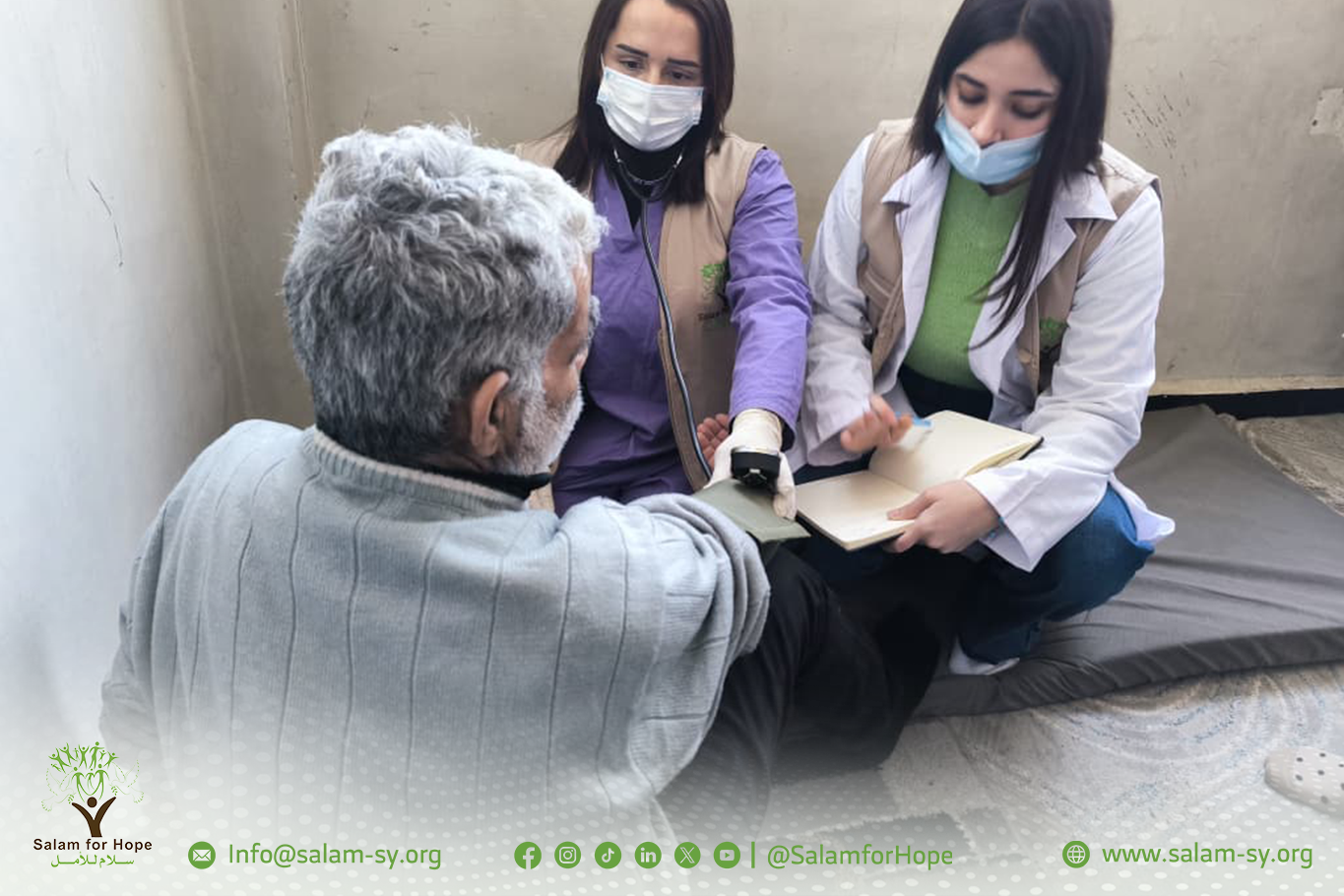
استجابة صحية عاجلة لتلبية احتياجات النازحين في مراكز الإيواء
Urgent Health Response to Meet the Needs of Displaced People in Shelters
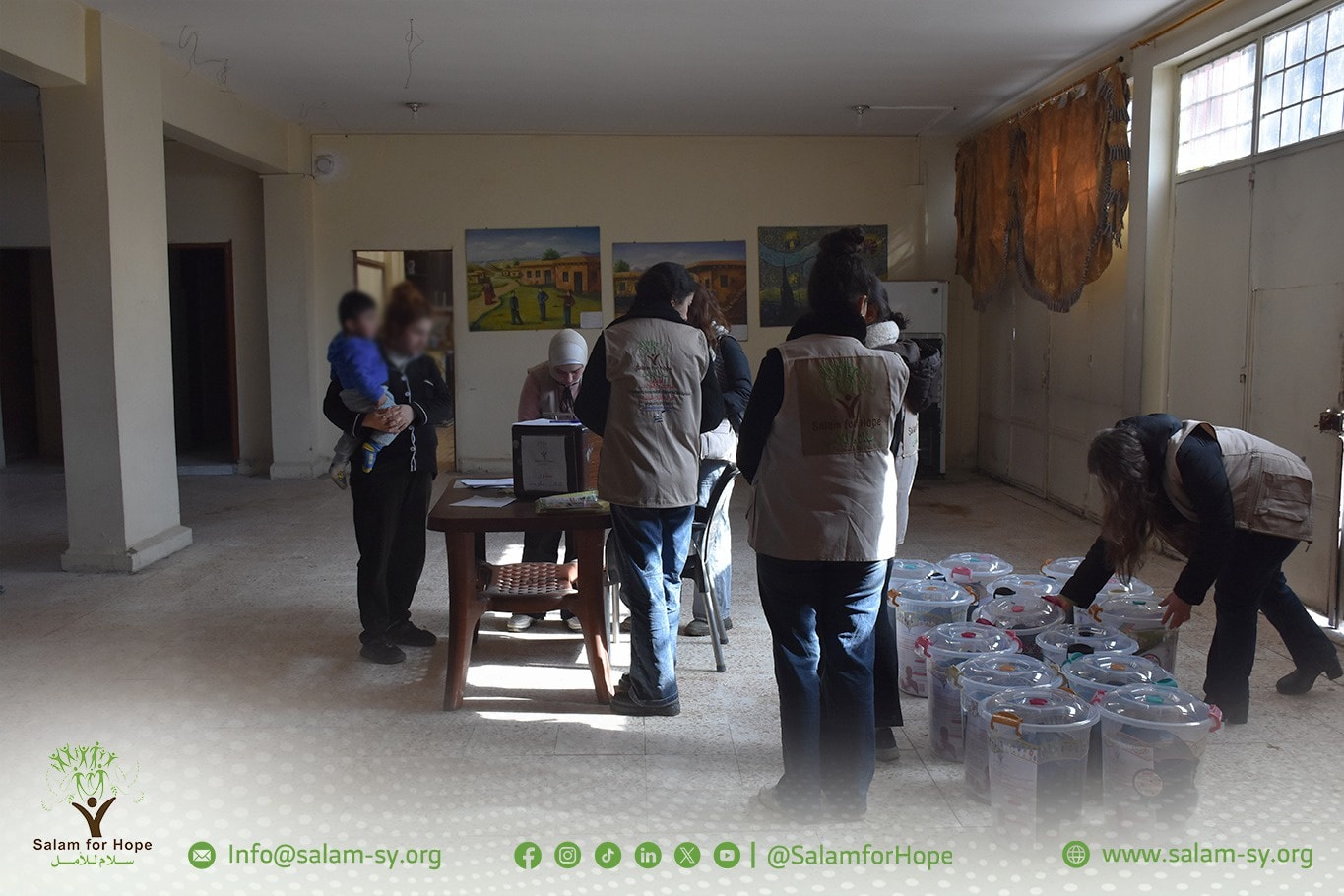
Belavkirina awarte ya sepetên rûmetê bo kesên koçberbûyî yên navxwe li bajarê Hesekê
توزيع طارئ لسلة الكرامة للنازحين داخليًا في مدينة الحسكة
Emergency Distribution of Dignity Kits for IDPs in Hasakah City
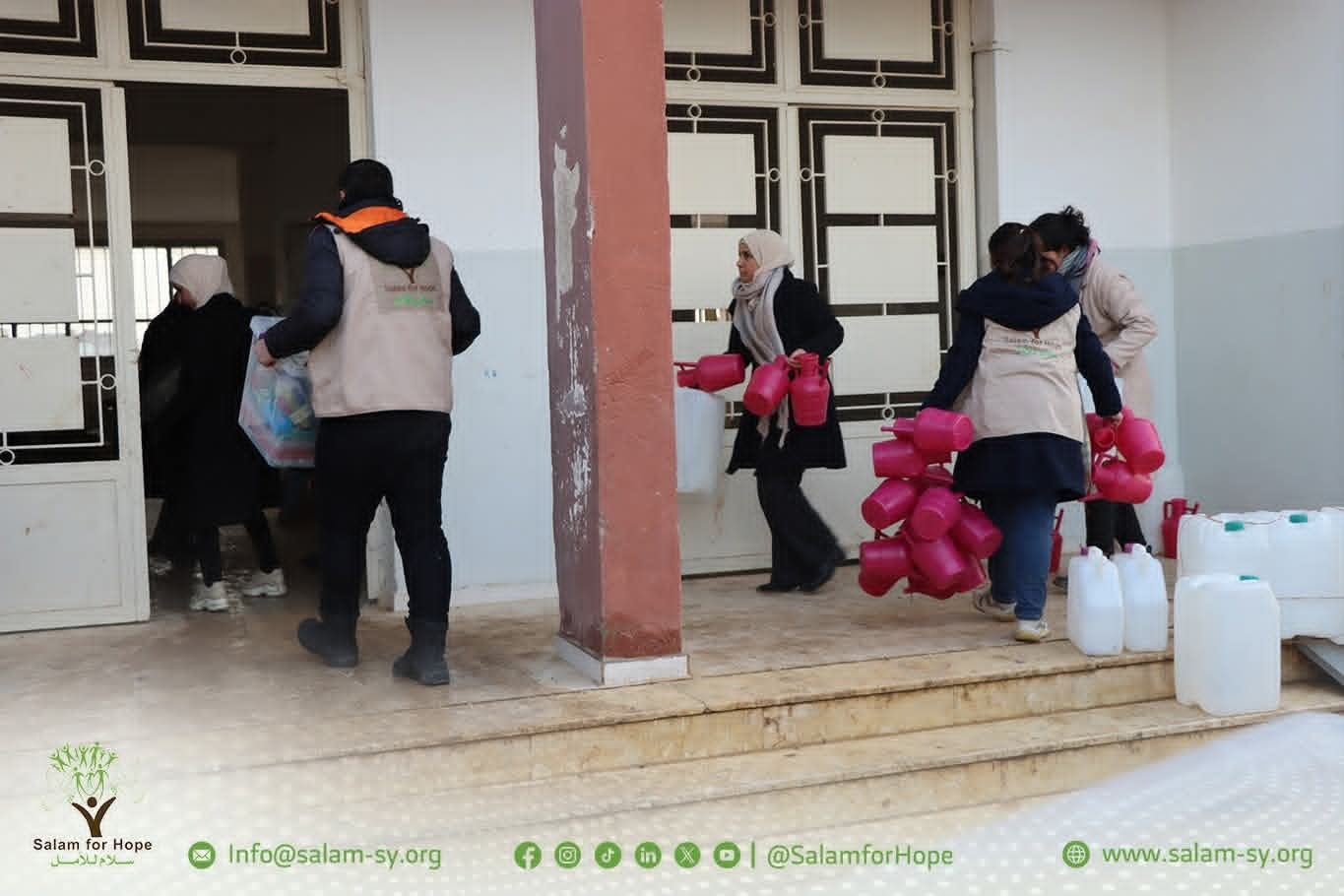
Emergency Response – NFI & Dignity Kits Distribution
Amid the continued waves of displacement and harsh living conditions, Salam for Hope Foundation implemented an urgent humanitarian intervention to support displaced families in shelter centers across Hasakah Governorate, specifically in the cities of Qamishli and Amuda, aiming to alleviate their suffering and preserve their human dignity.Qamishli – Ali Ibn Abi Talib School Shelter Center▪️ Distribution of kits addressing the essential needs of women and girls.Amuda – Saleh Younis School Shelter Center▪️ Distribution of Hygiene Kits▪️ Blankets▪️ MattressesThis response reflects Salam for Hope Foundation’s commitment to rapid humanitarian action and to supporting affected families amid the severe conditions they continue to face.Salam for Hope Foundation
الاستجابة للطوارئ – توزيع المواد غير الغذائية و سلة الكرامة
Urgent Call to Protect Civilians, Halt Military Operations, and Adopt Political Solutions
The undersigned organizations are closely monitoring, with deep concern, the humanitarian and security situation in northeastern Syria following the signing of the agreement reached between the Syrian Transitional Government and the Syrian Democratic Forces on 21st January. The agreement aims to establish a ceasefire and to take steps toward integration within the Syrian state. As the four-day period stipulated in the agreement approaches its end, and at a moment marked by fear, widespread displacement, and renewed violence, the transition from armed confrontation to pathways centered on the protection of civilians, the safeguarding of the rights and dignity of the Syrian people, dialogue, and political solutions is of critical importance and must be preserved and strengthened. In recent days, there has been a dangerous escalation of violence in the city of Aleppo and in several areas of northern and eastern Syria, accompanied by large-scale displacement and a significant deterioration of humanitarian conditions. During this period, serious violations of international law have been reported by both parties to the conflict against the Syrian people, in many cases amounting to collective punishment for the purposes of political pressure. The undersigned organizations call for an independent and impartial investigation into all alleged violations committed by all parties to the conflict, within the mandate of the Commission of Inquiry (CoI), and for the prosecution of all individuals found to be responsible for these violations. As a result of this escalation and increasing violence, widespread displacement has been reported in northeastern Syria, affecting more than 134,000 people over a short period of time, according to the United Nations. The displaced have arrived in the cities of Qamishli, Amuda, al-Malikiyah/Derik, and Kobani. Many displaced persons face severe shortages of shelter, food, and humanitarian assistance, amid harsh weather conditions that further exacerbate their vulnerability. Given the critical humanitarian situation and the military encirclement of several areas, including Kobani, the undersigned organizations demand that the Syrian Transitional Government ensure the adoption of all necessary measures to restore essential services (electricity, water, food, internet, and medicines) to residents of the affected areas, open safe humanitarian corridors, and facilitate the work of humanitarian organizations to mitigate the impact of displacement on the population. This escalation has generated deep fears among residents, particularly in Kobani and al-Hasakah, regarding the entry of the Syrian Transitional Government; fears that cannot be separated from the cumulative impact of past violations and their enduring legacy on local communities, and the profound lack of trust they have produced. This reality underscores the central importance of trust-building and the serious consequences of its absence. Trust cannot be imposed or extracted by force; rather, it must be earned through concrete steps, including the protection of civilians, the regulation of the conduct of armed actors, ensuring accountability for violations, restoring rights (including property, land, and housing rights) and engaging in genuine and effective dialogue with all Syrians. Accordingly, the undersigned organizations call on both the Syrian Transitional Government and the Syrian Democratic Forces to fulfill their legal obligations to protect civilians and prevent any harm to them, and to take effective and tangible measures to prevent any act or rhetoric that could incite violence, inflame societal tensions, or deepen divisions among Syrians, given the direct threat this poses to civil peace and the serious legal responsibilities it may entail. In light of incidents of communal violence that occurred in 2025, both the Syrian Transitional Government and the Syrian Democratic Forces bear heightened obligations to ensure effective protection for all at-risk communities and to take proactive and concrete measures to prevent any form of collective violence or harm against Syrians and to guarantee non-recurrence of violations. In this context, the undersigned organizations affirm that any approach to Kurdish national rights, including those referenced in Presidential Decree No. 13, must begin first and foremost with serious and open dialogue with the Kurdish communities themselves, and must evolve in line with their collective visions and aspirations. We further stress that any recognition of rights is incomplete unless it is translated into legal guarantees and constitutional protections that are safeguarded from manipulation and provide effective protection on the ground, including the adoption of explicit measures to prevent any form of collective punishment against Kurdish communities or any other component. We further emphasize the urgent need to confront hate speech and incitement and to ensure accountability for it. Incendiary rhetoric, dehumanizing narratives, and misinformation fuel fear, legitimize violence, and place civilians at risk. They also undermine efforts to rebuild trust between communities and perpetuate cycles of grievance and revenge. All parties, including media outlets, must act responsibly and refrain from using language that promotes hatred, justifies violations against any societal group, or spreads rumors. We also stress the necessity of ensuring unconditional access for documentation groups and international and independent media to guarantee transparent documentation and coverage. The undersigned organizations also emphasize the need to approach security developments from the perspective of the rights of victims of arbitrary detention and enforced disappearance, and to uphold the duty to protect files, documents, detention facilities, and prisons. We further call on the Syrian Transitional Government to act transparently and to share information regarding the files of detained ISIS members accused of crimes, the files of the organization’s missing persons and victims, and the files of detainees and missing persons in the prisons of the Transitional Government, and the prisons of the Syrian Democratic Forces, including those recently detained. We affirm that both the Syrian Transitional Government and the Syrian Democratic Forces bear joint responsibility for the Syria that is being built today. No one is beyond accountability, and no political or military objective can justify violations of human rights. All parties bear responsibility not only for ending the violence, but also for ensuring that new grievances are not created that could harm the future of the Syrian people. The interests, safety, and dignity of Syrians must take precedence over considerations of power, control, or influence. This agreement should represent a genuine turning point, replacing the use